25–40%
of weight lost was lean mass
Across body-composition studies of semaglutide and tirzepatide. Lean mass includes muscle.1,2
When people stop these medications, the weight tends to come back. A 2026 BMJ review of 37 studies projected a return to starting weight about 1.5–1.7 years after stopping.5 In trials, roughly 25–40% of weight lost was lean mass, not fat.1,2 What holds the line is what you build while the medication is working: muscle and habits. Keep the Muscle is the 78-page program that builds both, made for a tiny appetite and bad knees, with or without a gym.
The medication quiets hunger while you're on it. Your body has a long memory, though, and what happens next depends on what you build now. This is what the research says. None of it is a reason to change your medication; that's between you and your doctor. It's a reason to use this time well.
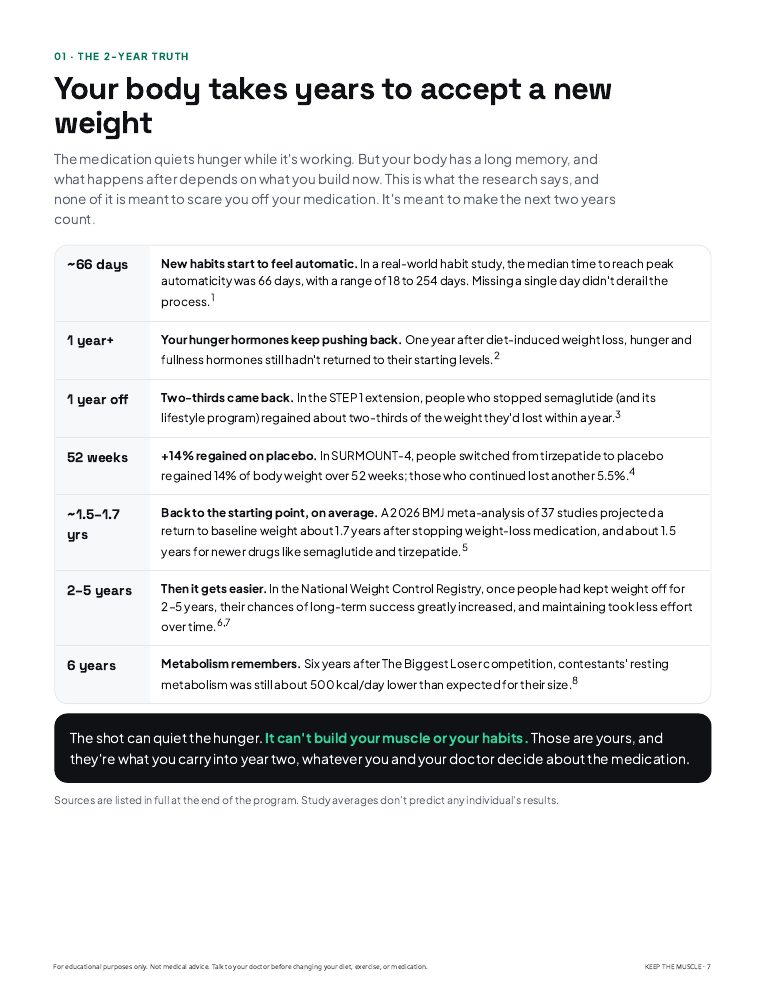
In a real-world habit study, the median time to automaticity was 66 days (range 18 to 254). Missing a single day didn't derail it.6
A year after diet-induced weight loss, hunger and fullness hormones still hadn't returned to their starting levels.7
In the STEP 1 extension, people who stopped semaglutide regained about two-thirds of the weight they'd lost within a year.3
People switched from tirzepatide to placebo regained 14% of body weight over 52 weeks. Those who continued lost another 5.5%.4
A 2026 BMJ review of 37 studies projected a return to starting weight about 1.7 years after stopping weight-loss medication, and about 1.5 years for newer drugs like semaglutide and tirzepatide. Regain was faster than after diet-and-lifestyle programs.5
In the National Weight Control Registry, people who had kept weight off for 2–5 years had much better odds of long-term success, and maintaining it took less effort over time.8,9
Six years after The Biggest Loser, contestants' resting metabolism was still about 500 calories a day lower than expected for their size.10
Study averages, not predictions for any one person. Full sources at the bottom of the page.
Two people can lose the same weight and end up in very different places. One loses fat and muscle and ends up smaller, but weaker and primed to regain. The other protects their muscle and ends up lighter and stronger. Protein and strength training are what make the difference.
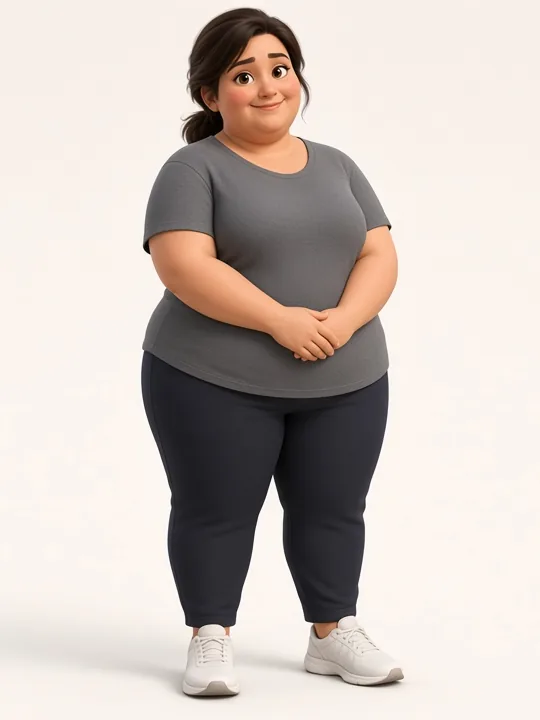
Higher weight, lower energy, joints that complain.

Fat and muscle gone. Smaller, but softer and tired, with a slower metabolism. Easy to regain from.
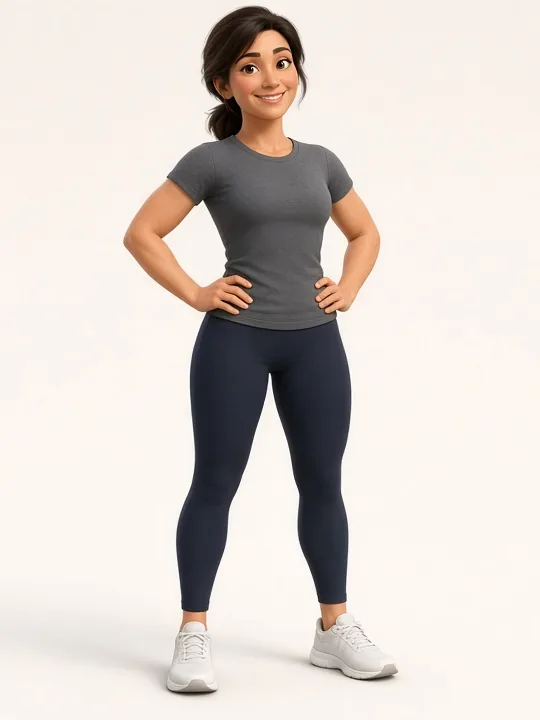
Fat down, muscle kept. Stronger on the stairs and better set up to hold the weight off.
AI-generated illustrations, not real people, and not a promise of any result. Individual results vary.
Picture yourself 24 months from now. Same medication journey, two very different people.

Still hitting her protein most days. Still training three times a week. Not because the medication is doing it, but because the habits are hers now.
AI-generated illustration, not a real person or a promised result.
Every week you lose weight without enough protein and strength work is a week some of that weight can come from muscle. The best time to build Version B is now, while the medication is making the food part easier.
When you're barely eating, your body doesn't only burn fat. Without enough protein and some kind of strength work, it breaks down muscle too. The scale can't tell the difference, so most people don't notice until they're tired, weaker and softer than they expected.
Across body-composition studies of semaglutide and tirzepatide. Lean mass includes muscle.1,2
Losing strength is easy to miss on the scale and hard to miss in daily life: carrying bags, climbing stairs, getting up off the floor.
Lose muscle along with the fat and you end up "skinny-fat": a smaller size without the shape or tone you were working toward.
Muscle burns energy even at rest. Lose it, and keeping the weight off gets harder once your appetite comes back.5,10
Sources at the bottom of the page. Individual results vary.
You've probably heard all three of these. Each one is right in theory and useless on a day when half a yogurt feels like a full meal.
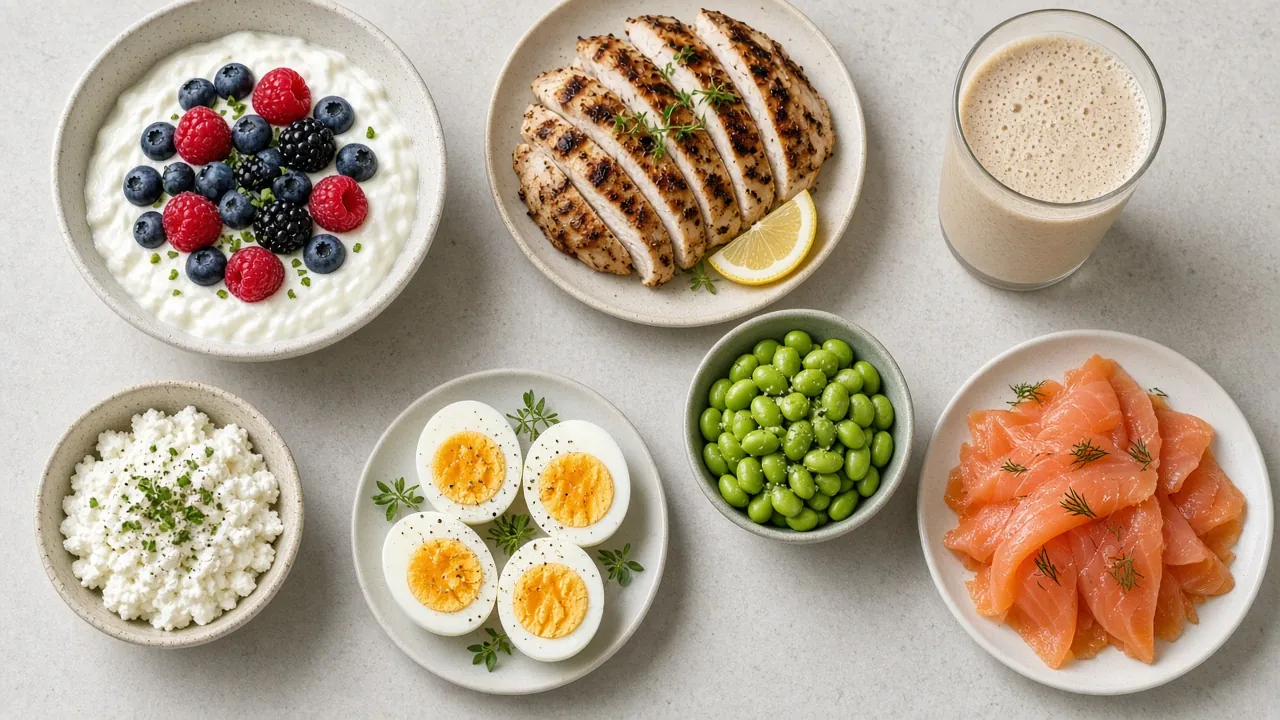
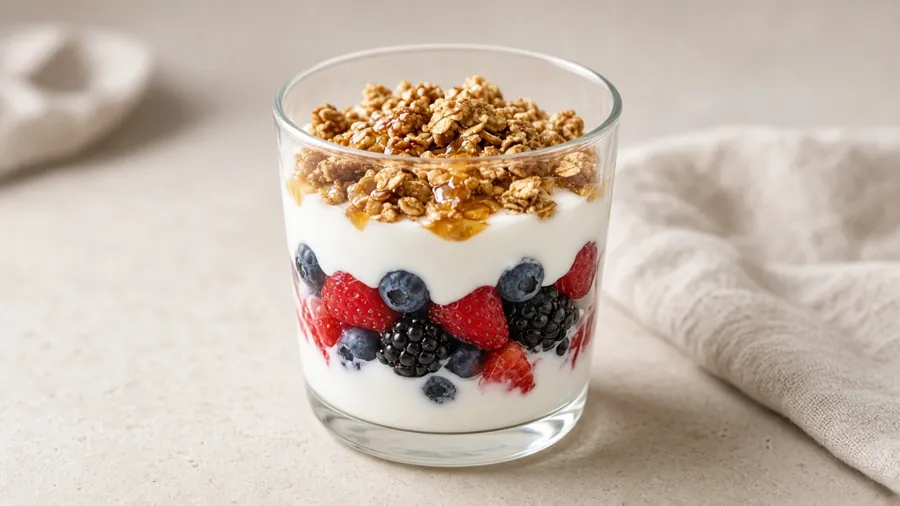
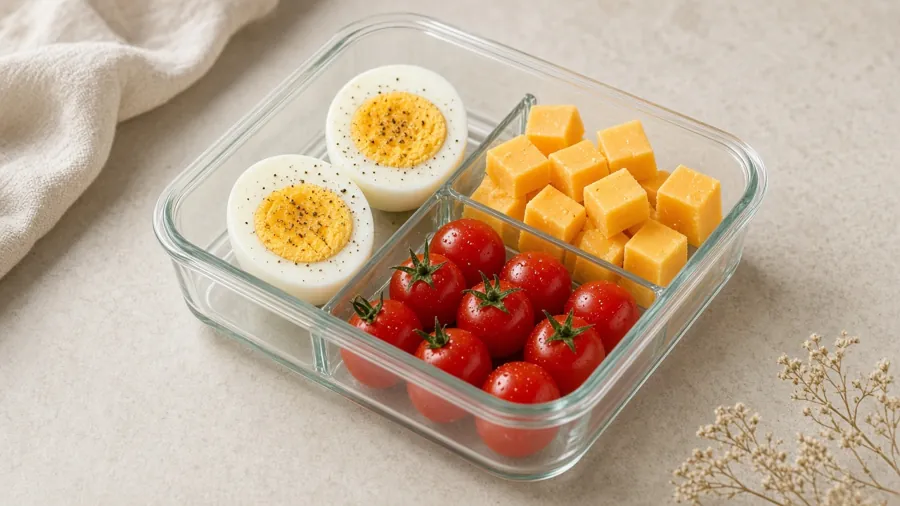
Food images are AI-generated illustrations.
How much? And how do you get it in when a chicken breast feels like a Thanksgiving dinner?
A personal number, split into 4 mini-meals, using the 40 foods with the most protein per bite.
With bad knees, no gym membership and zero interest in becoming a gym person?
Pick a track: 12 weeks at home with no equipment, or 12 weeks on beginner gym machines. No jumping, no deep squats.
Apps, scales and spreadsheets for every bite. Most people quit within a week.
You track one number and one checkbox a day. The menus do the math for you.
A joint advisory from four obesity and nutrition societies says people on GLP-1 medications should prioritize protein and pair it with strength training, because protein alone isn't enough.11 The program makes both doable, starting this week and lasting through month 24.
Two minutes with the calculator below for an estimate of your daily protein target, to discuss with your doctor or dietitian.
Follow the 28-day plan, cook from 50 recipes, and use 30 swaps when the chocolate, chip or late-night cravings hit.
A 12-week home or gym program that gets a little harder each week. Then the 2-Year Plan keeps you on track through maintenance.
Both programs run 12 weeks, 3 days a week, and get a little harder every week so your muscles keep a reason to stay. No jumping, no lunges, no deep squats.
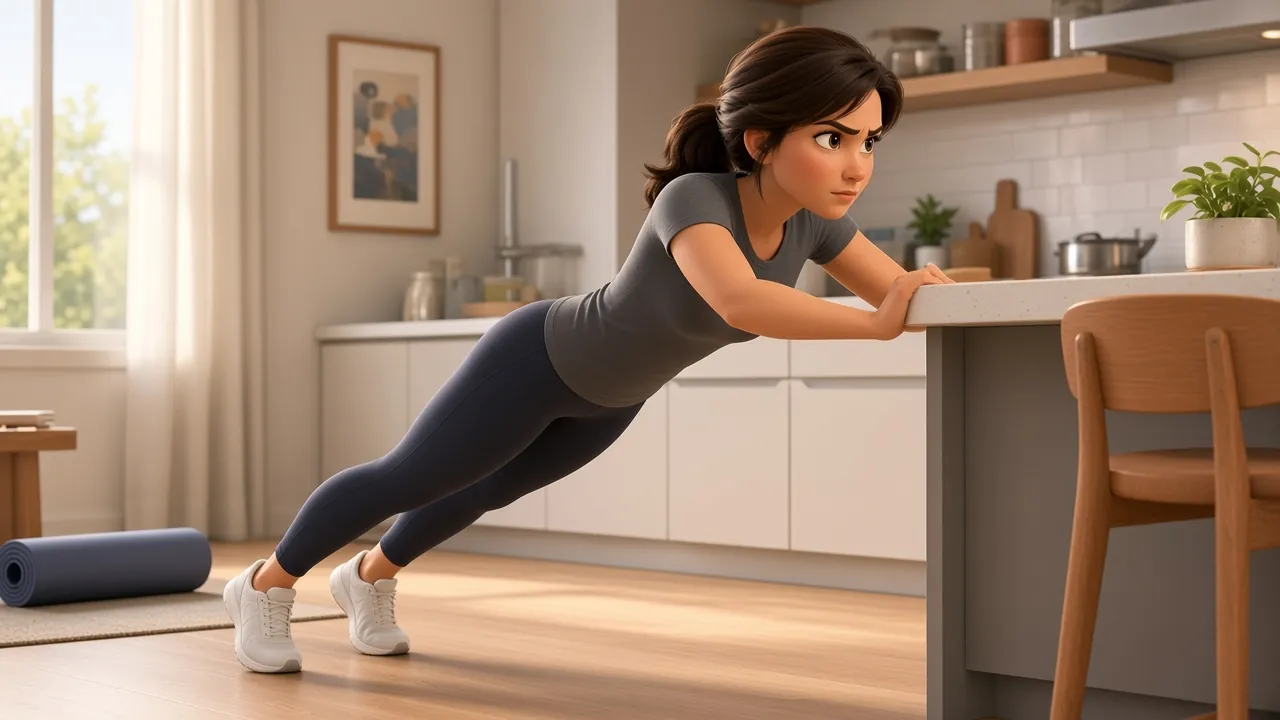
A sturdy chair, a wall, a counter and the floor. That's it.
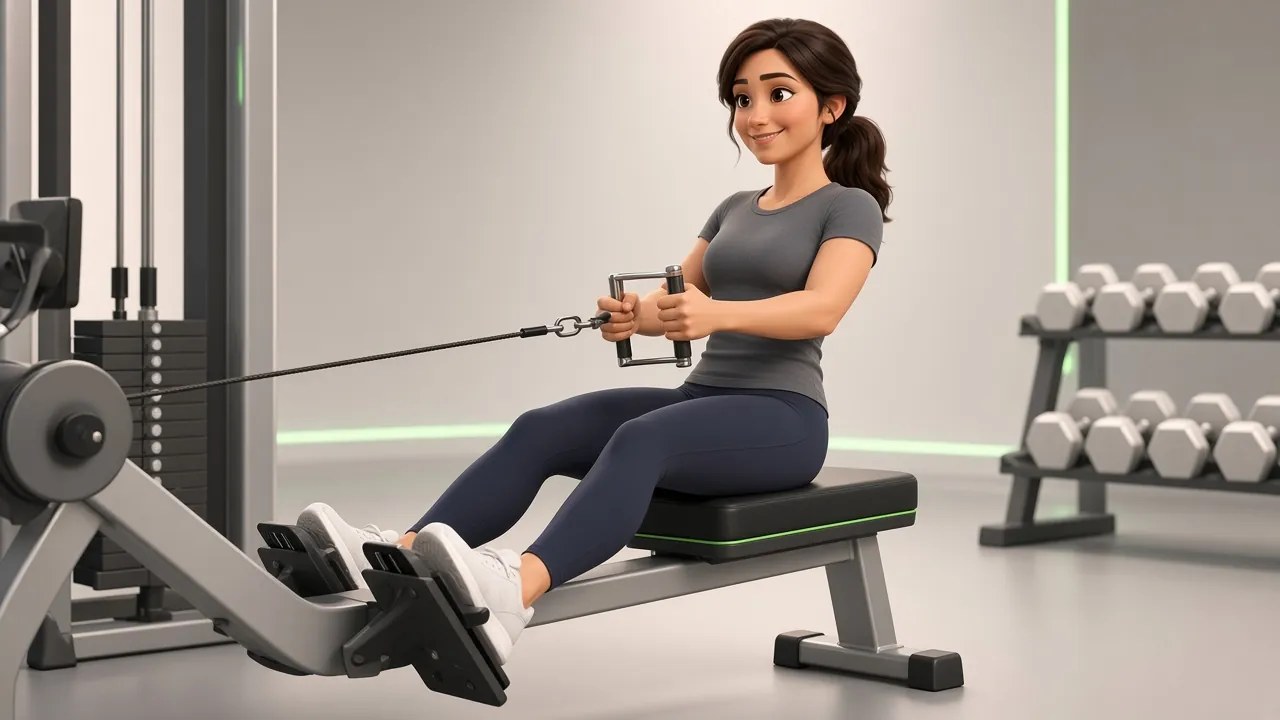
Machines and dumbbells, laid out so you never wonder what to do next.
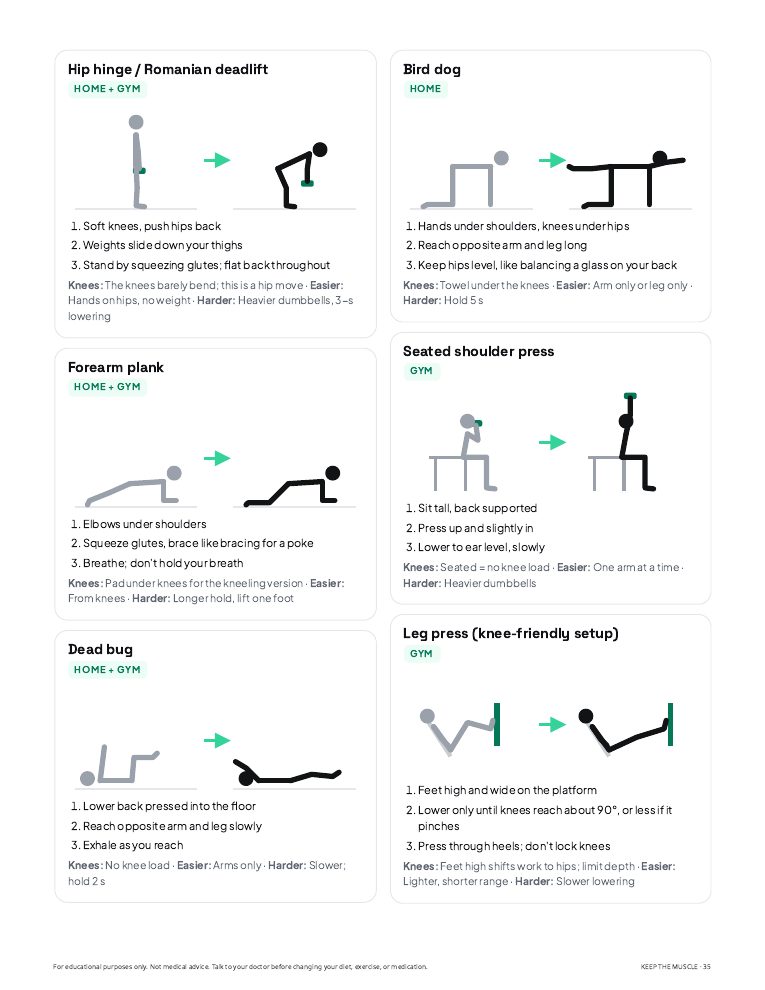
Plus an 18-exercise library with form cues and simple diagrams. Images are AI-generated illustrations, not real people.
Uses the common 1.2–1.6 g per kg of goal body weight range. This is an estimate to discuss with your doctor or dietitian, not a prescription. Check with them before raising your protein, especially if you have kidney disease or another medical condition.
Week 1 starts at a lower floor and builds up, because nobody goes from 40 g to 110 g overnight. The 28-day menus run around 100 g a day, with add-on boosters to reach 120 or 140 g.
An educational estimate only. Talk to your doctor or dietitian about the right target for you.
Turn this into a full meal planMost "GLP-1 guides" are a list of protein foods and a pep talk. This is the whole system: what to eat, when, what to eat instead of junk, how to train at home or at the gym, and what to do in month 13 when your appetite starts coming back. It reads well on your phone and prints cleanly.
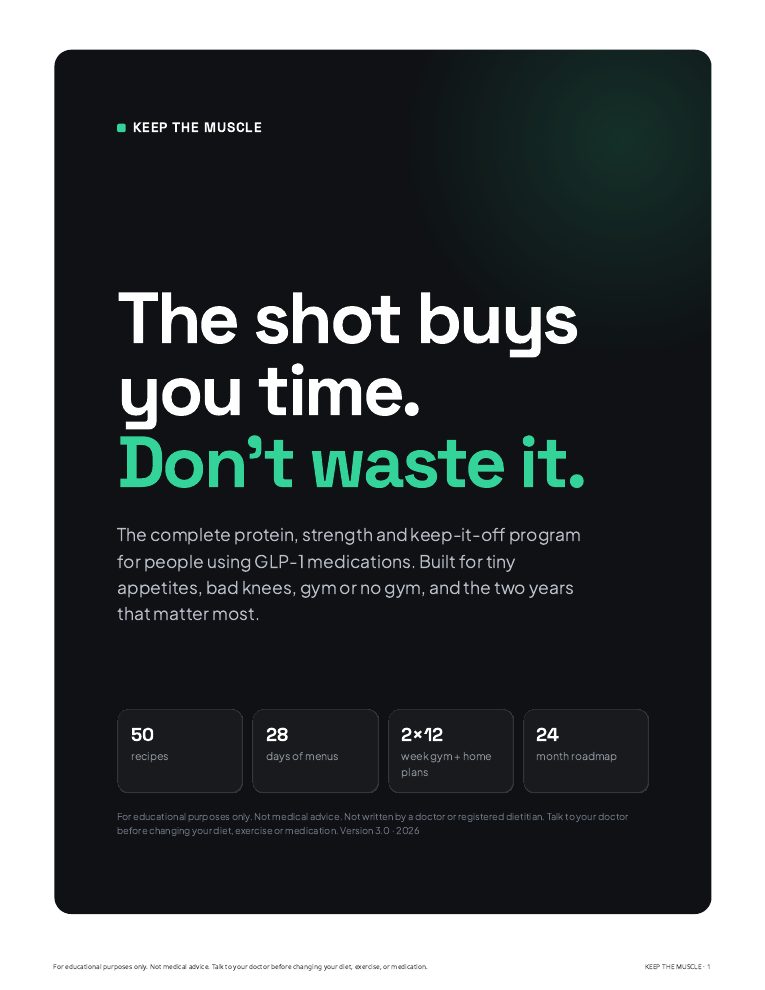
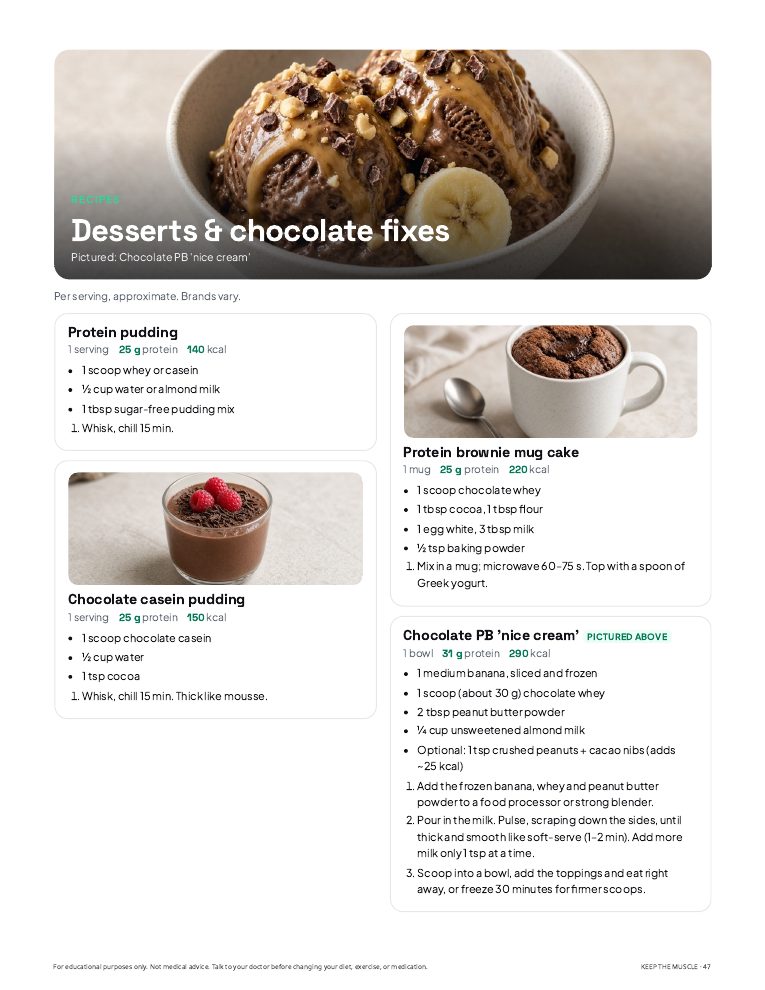
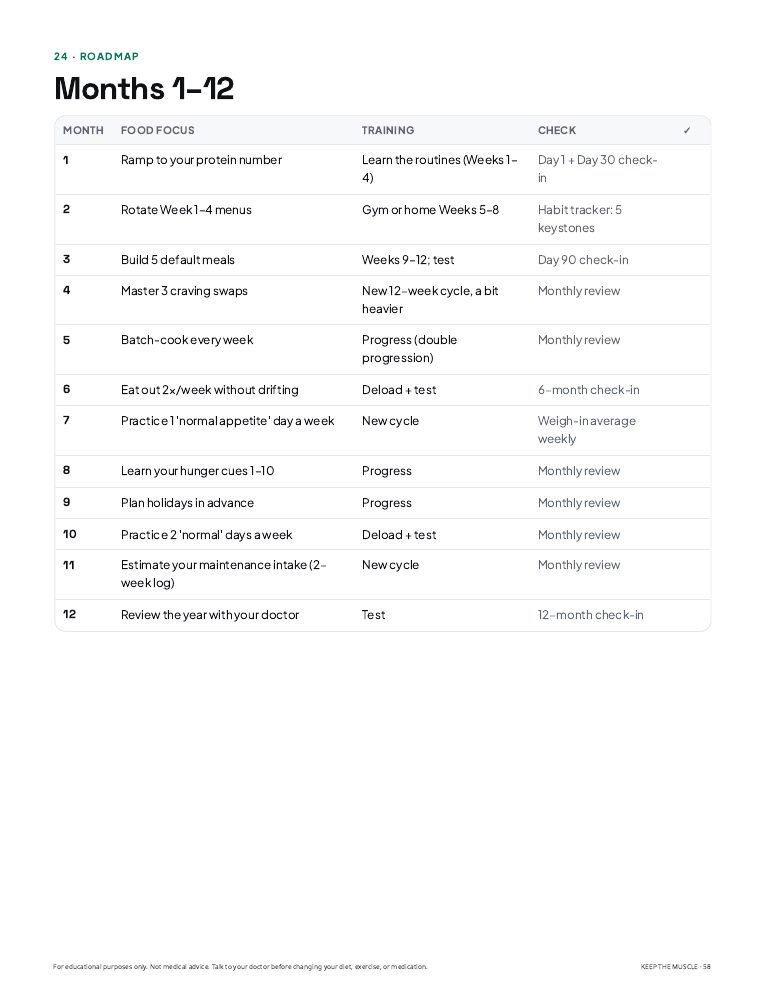
Real pages from the program. Page numbers match the PDF.
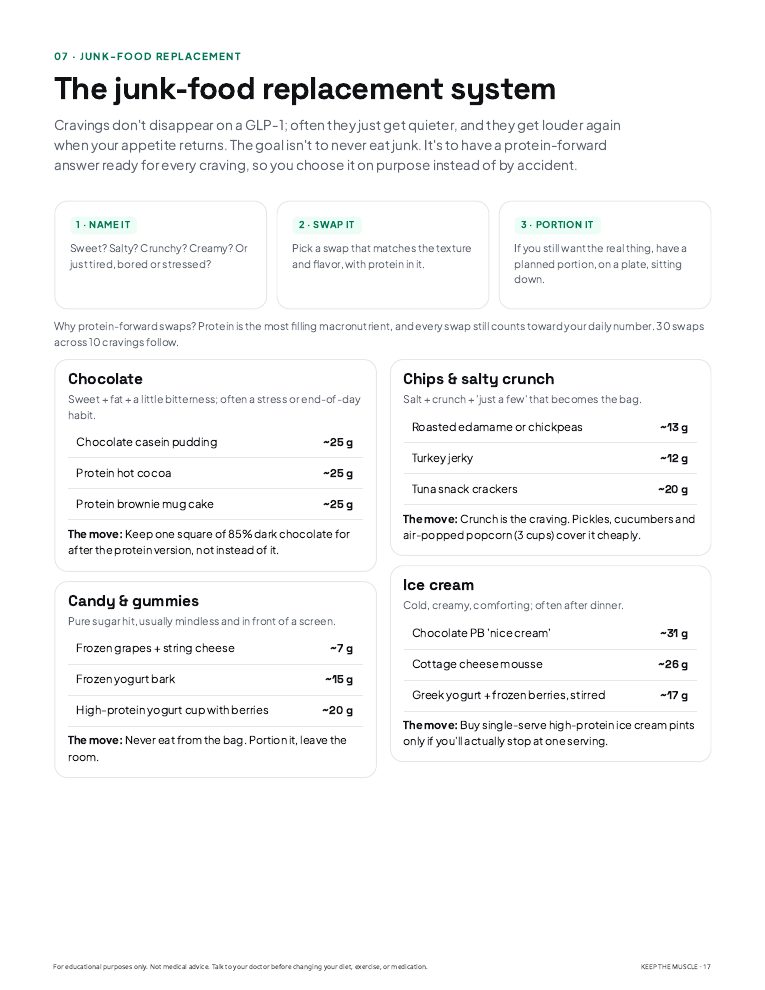
30 protein-forward swaps for 10 cravings: chocolate, candy, chips, ice cream, fast food, soda, late-night snacking, pastries, pizza and fries. Each says why it works.
When to eat with a tiny appetite, what to eat before and after training, and an evening plan for the sweet tooth.
Home: chair, wall, counter and floor, no equipment. Gym: beginner machines and dumbbells, 3 days a week. Both knee-friendly, with sets, reps and how hard it should feel.
Breakfasts, lunches, dinners, snacks and grab-and-go, desserts and chocolate fixes, and shakes. Protein and calories per serving on every one.
Five phases and a month-by-month roadmap from month 1 to 24, a habit system, regain warning signs and what to do, and how to find your maintenance calories.
Eating out at 10 kinds of places, travel, holidays and celebrations, and alcohol, so one weekend doesn't undo a month.
A worksheet for your number and a 2-week ramp, 40 foods ranked by protein per bite, 10 small-appetite rules and a rough-day menu.
30-day tracker, weekly habits, craving log, home and gym 12-week logs, a 24-month weigh-in log, strength check-ins and a monthly review.
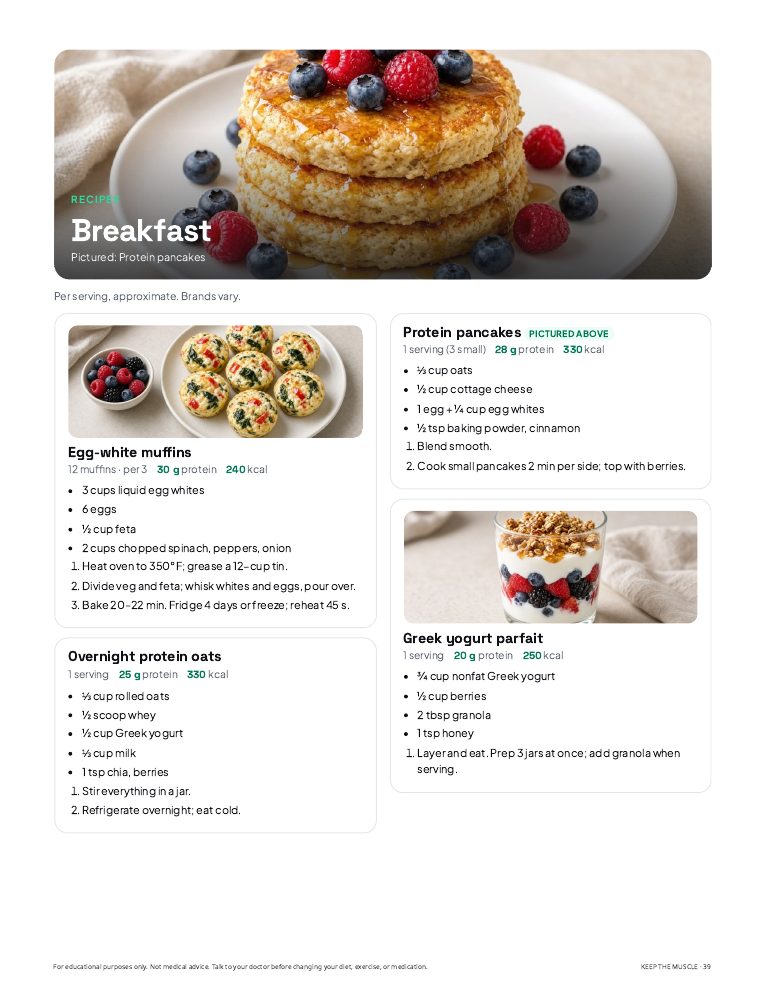
Breakfasts, lunches, dinners, grab-and-go snacks, shakes and 9 desserts and chocolate fixes. Every recipe lists protein and calories per serving, and most take under 15 minutes.
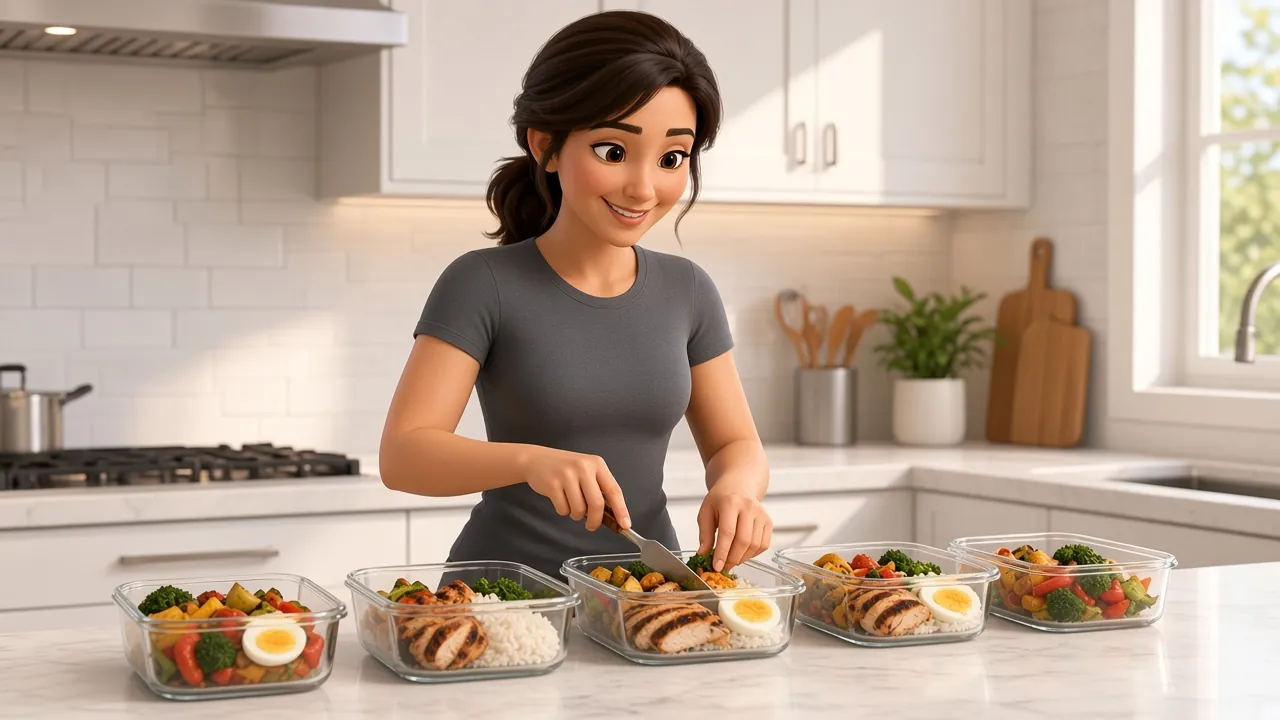
Week 3 of the 28-day plan is built around one batch-cook session: shredded chicken, turkey chili, egg muffins and meatballs that turn into 4 days of small meals.
Each week comes with its own grocery list, sorted by store section.
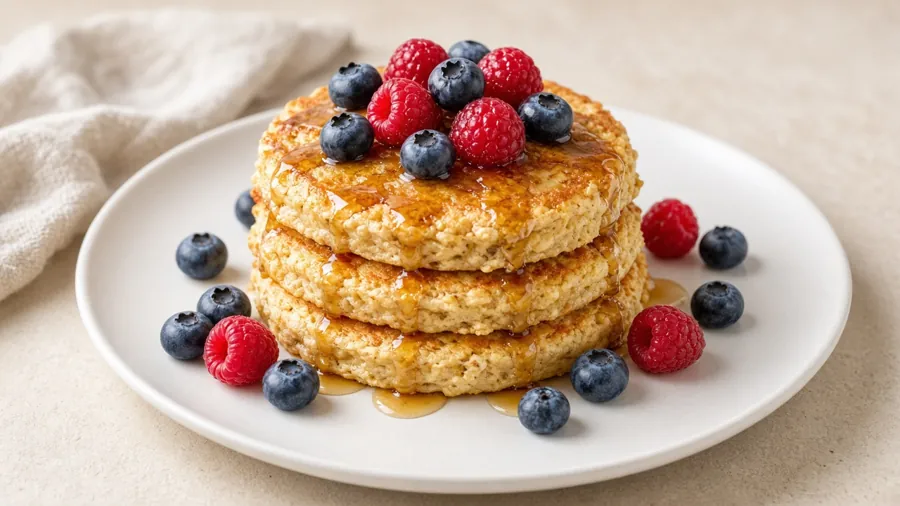
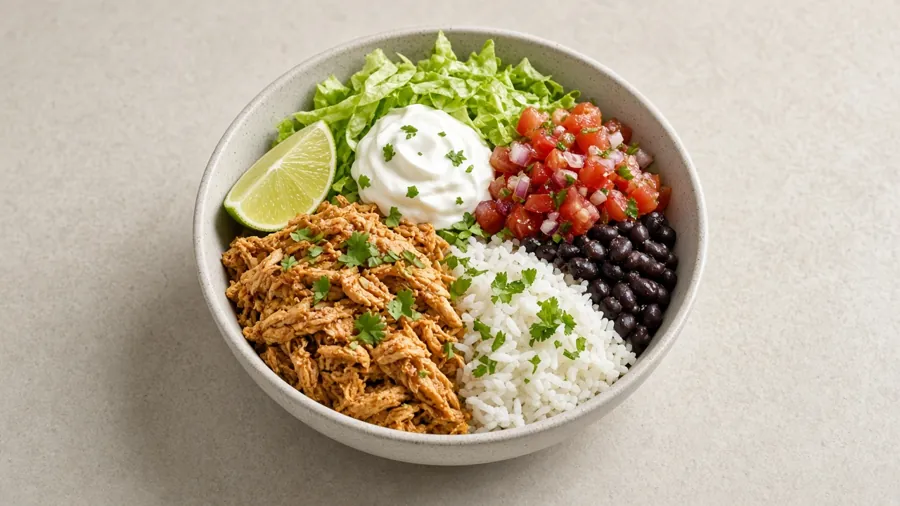
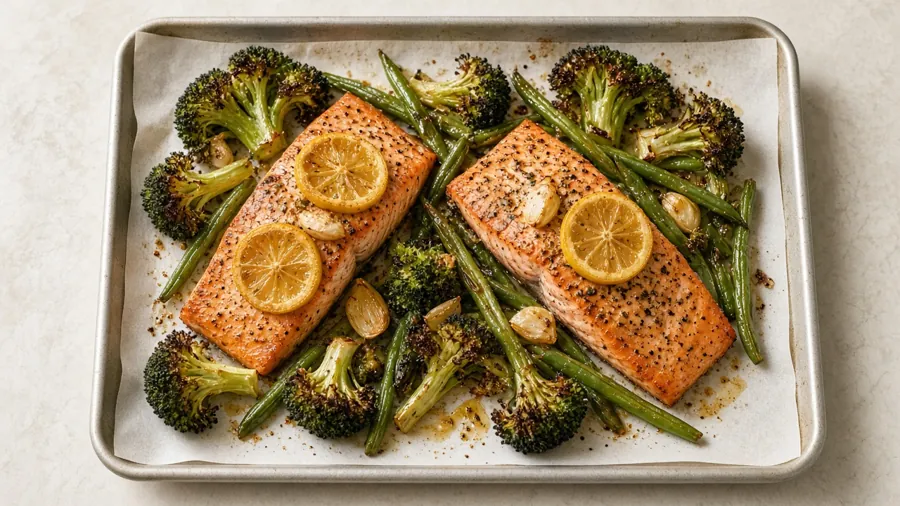
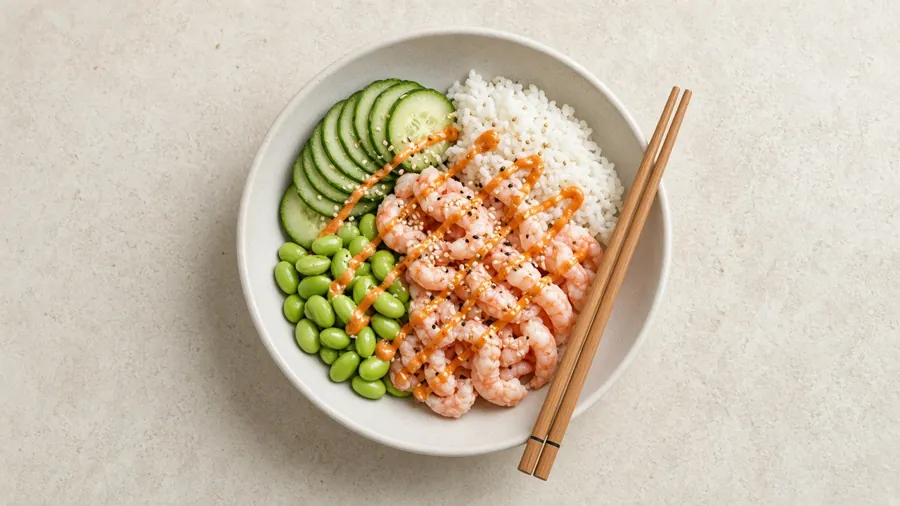
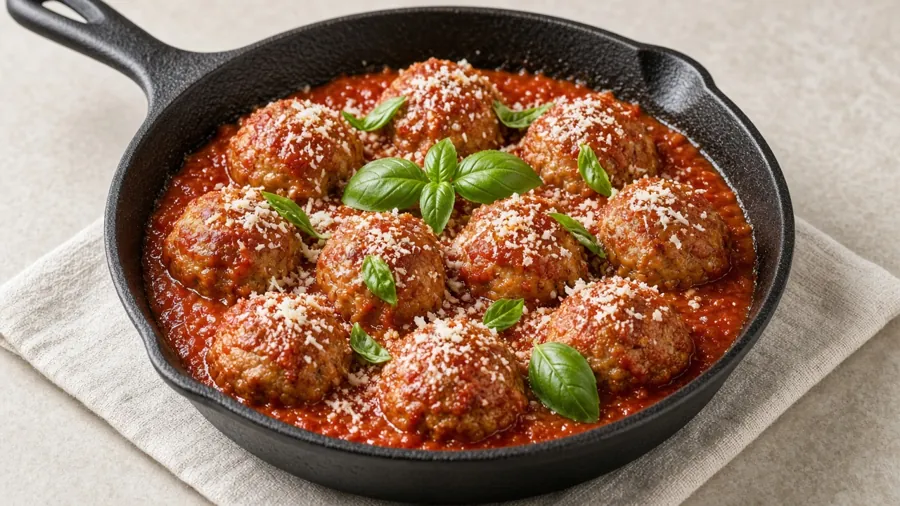
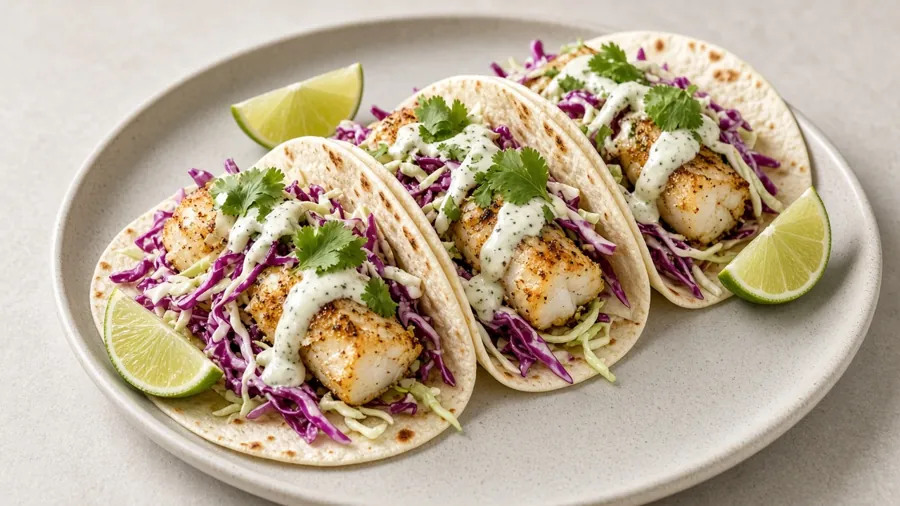
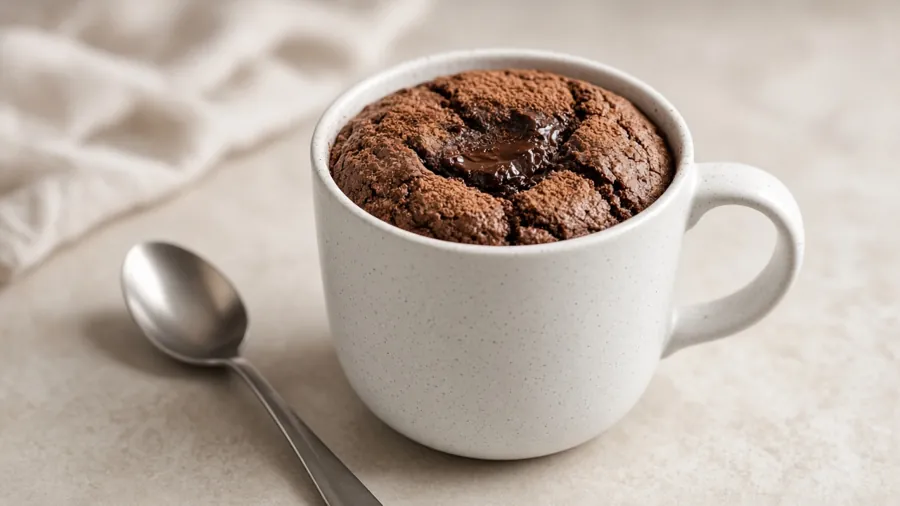
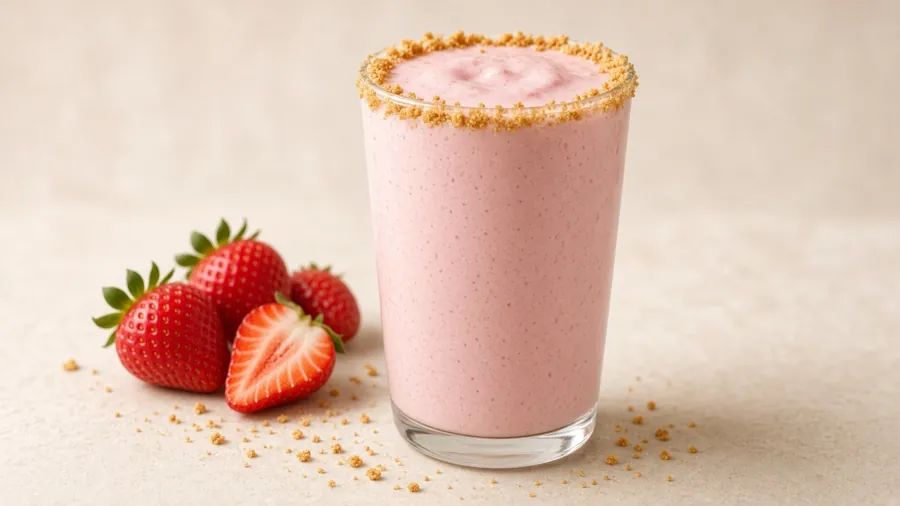
Recipe images are AI-generated illustrations. Protein and calories are approximate; brands vary.
Pictured: Chocolate PB 'nice cream'
Per serving, approximate. Brands vary.
Plus the 28-day meal plan, both 12-week training programs and the 2-Year Plan. 78 pages.
Get all 50 recipesNo weird ingredients and no 45-minute recipes. Small plates that add up.
| Meal 1 | Skyr with a spoon of peanut butter powder and berries | 21 g |
| Meal 2 | Rotisserie chicken, cheese stick and a few crackers | 31 g |
| Meal 3 | Tuna salad (4 oz) in lettuce cups with cherry tomatoes | 26 g |
| Meal 4 | Ready-to-drink protein shake, sipped over 30 min | 30 g |
| Booster | Turkey jerky (1 oz), if you've got room | 12 g |
| Total | The menus set a protein floor, not a calorie target. Eat more if you're hungry; your doctor or dietitian can help set calories. | 120 g |
| 1 | Chair sit-to-stand | 3 × 10–12 |
| 2 | Incline push-up (counter) | 3 × 10–12 |
| 3 | Glute bridge | 3 × 10–12 |
| 4 | Prone Y-raise / superman | 3 × 10–12 |
| 5 | Dead bug | 3 × 10–12 |
| Time | About 20–25 minutes. Stop with 2–3 good reps left | 3x/wk |
Name changed for privacy. Portrait is an AI-generated illustration, not a photo of Phil. Real story, real numbers.
Built from experiencepounds, on a GLP-1 medication
Phil trains martial arts. When he started a GLP-1 medication, food stopped being interesting almost overnight. The scale wasn't what worried him. Getting weaker on the mats, and gaining it all back later, did.
His knees are shot and he'd rather do almost anything than spend an hour in a commercial gym. So the plan was built the way you'd build any good training plan: one number to hit, a simple way to hit it, short sessions that don't wreck the knees, and a plan for what comes after. This program is that plan, written out in full, for anyone in the same spot.
Phil's weight loss came from the medication; the program is about keeping strength and habits. Your results will vary. Phil's results are his own and not typical. We're not doctors or registered dietitians. This program covers food and training habits that go alongside your prescriber's care, not instead of it.
You're already investing a lot of money and effort in losing this weight. This is the part that helps you keep it. Yours to keep, with free updates to this edition.
That's about 25 cents a page, or less than one meal out.
Checkout opens at launch. Join the list and we'll email you when it does.
Not medical advice · Not a substitute for your doctor
Terms & refunds · Privacy
Not for you? Email us at hello@getkeepthemuscle.com within 30 days for a full refund. No questions. Refund terms
The bigger cost is a year without a plan.
Not on day one, and the plan doesn't ask you to. Week 1 starts at a lower floor and ramps up over two weeks. The menus lean on foods with the most protein per bite, plus drinkable options you can sip over 30 minutes. That's how a small appetite gets to a big number.
Every routine was picked to avoid deep knee bends, jumping and lunges, and each exercise has an easier version. You start with two sets and build slowly. If something hurts, you stop and swap it. If you have a specific injury, check with a physical therapist first.
No. The home track uses only a sturdy chair, a wall, a counter and the floor. If you do have a gym, there's a separate 12-week gym track using beginner machines and dumbbells. Pick one, or switch later.
No. This program never tells you to start, stop or change any medication or dose. That's a decision for you and your doctor. The program works alongside your treatment, whatever you decide.
We can't promise that, and nobody honestly can. What the research shows is that keeping weight off is a long-term project, and that protein, strength training and solid habits are what you control. This program gives you a specific plan for each of those, for two years.
It's written for people using semaglutide or tirzepatide medications, including compounded versions. The food and training advice works for anyone eating small portions. We don't sell, recommend or give advice about any medication, and we're not affiliated with any drug maker.
No. It's educational food and exercise guidance based on published nutrition recommendations. It doesn't replace your prescriber or a registered dietitian. Talk to your clinician before changing your diet or exercise, especially if you have kidney disease, diabetes or another condition.
Yes, if you eat eggs and dairy. There's a swap table for every meat and fish meal. If you're fully vegan, it's harder. The swaps cover tofu, tempeh, seitan and legumes, but you'll rely on plant protein powder more often.
Part 7, The 2-Year Plan, covers what to do when your appetite returns: regain warning signs, how to find your maintenance calories and how to adjust protein. Any decision about your dose or stopping belongs to you and your doctor.
Checkout opens at launch; join the list to hear first. Once checkout is live, you'll get a download link after purchase. It's a 78-page PDF that reads well on a phone and prints cleanly, and the 12 tracker pages are made for printing.
It's a launch price while we collect feedback. If the price goes up later, you keep everything you bought, including future updates to this edition.
Your number, your first week of meals and your first training session. Version B starts with one week.
Get the 78-page program — $19